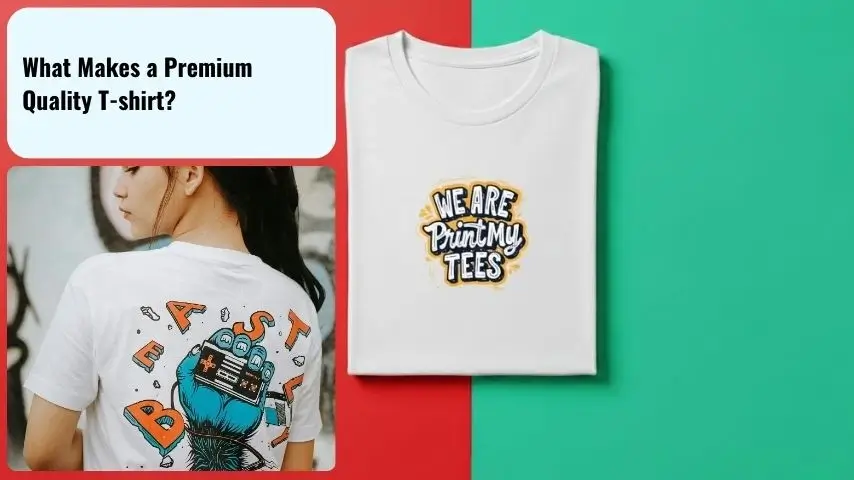
A premium T-shirt is defined by high-quality fabrics, precise construction, and durable finishing. It feels soft, breathable, and comfortable, maintains its shape and color through repeated wear and washes, and often incorporates sustainable, ethically sourced materials. Premium quality isn’t about logos; it’s about how the shirt performs, feels, and lasts over time.
When we pick up a T-shirt, we can usually tell within seconds whether it’s premium or not. Some shirts lose shape after the first wash, fade quickly, or feel rough against the skin. Others, the premium ones, stay soft, hold their form, and keep looking fresh for years. But what exactly sets a premium T-shirt apart from mass-market alternatives?
In this comprehensive guide, we’ll walk through every detail that defines quality from fabric choices and stitching methods to sustainability and cost breakdowns. By understanding these fundamentals, you’ll know exactly how to spot a premium essential and why it represents a smart long-term investment for your wardrobe.
What Defines a Premium T-shirt?
A premium T-shirt is built with better materials, better construction, and better durability. This trifecta creates garments that outperform standard options across multiple dimensions:
Fabric makes the shirt soft, breathable, and strong against daily wear and washing cycles.
Stitching and construction ensure it doesn’t fall apart, warp, or lose its intended silhouette over time.
Finishing processes protect the shirt from shrinking, fading, or developing surface imperfections.
Sustainability considerations demonstrate ethical responsibility toward workers and environmental impact.
Premium quality isn’t about a brand logo or marketing hype—it’s about how the shirt feels on our body and how well it performs over extended use. The distinction becomes clear when comparing garment lifecycles, comfort levels, and overall value proposition.
The Science Behind Premium Fabric Selection
Which Fabrics Define Premium T-shirts?
The story starts with fabric composition. Not all cotton or synthetic fibers are equal. Fiber length, purity, processing methods, and treatment separate luxury from ordinary garments.
What are Cotton Grades That Signal Premium Quality?
When it comes to premium T-shirts, the cotton grade plays a critical role in determining how a shirt feels, performs, and endures over time. Not all cotton is created equal, and understanding the different grades helps us choose fabrics that are soft, durable, and retain their look wash after wash. Here are the cotton grades that truly signal premium quality:
Pima Cotton: Extra-long staple fibers (34mm+) make it stronger, softer, and more resistant to pilling. These longer fibers create smoother yarn with fewer weak points, resulting in fabric that maintains integrity through countless wash cycles.
Supima Cotton: A protected trademark of American Pima cotton. Less than 1% of cotton worldwide qualifies for this designation. Known for exceptional color retention and silky texture that improves with age rather than deteriorating.
Egyptian Cotton: Long staple fibers cultivated in the Nile River valley, producing cotton with luxurious hand-feel and superior absorbent properties. The unique growing conditions create fibers with exceptional strength and softness.
What are Advanced Fiber Technologies and Alternatives Beyond Cotton?
Premium T-shirts today are no longer defined solely by cotton. Advanced fibers and innovative blends give us shirts that feel better, perform better, and last longer. Each material contributes unique qualities that elevate a T-shirt from standard to exceptional:
Organic Cotton: Grown without synthetic pesticides, herbicides, or GMO seeds, certified by Global Organic Textile Standard (GOTS) or OEKO-TEX standards. Better for sensitive skin and environmental sustainability, though typically requiring more water during cultivation.
Bamboo Viscose: Naturally antibacterial and moisture-wicking properties make it ideal for active wear and warm climates. The bamboo plant regenerates quickly, making it a renewable resource.
Modal and Tencel (Lyocell): Plant-based fibers derived from sustainably sourced beech trees through closed-loop production processes. These materials are biodegradable and offer luxuriously soft texture with excellent drape characteristics.
Silk Blends: While rare in T-shirts, small percentages of silk create high-end, draped effects with natural temperature regulation and inherent antibacterial properties.
Performance Synthetic Blends: Modern premium T-shirts often incorporate small amounts of elastane (spandex) or polyester for enhanced stretch recovery and moisture management without sacrificing natural fiber benefits.
| Fabric Type | Primary Attribute | Durability Rating | Hand-Feel | Sustainability Score |
| Pima Cotton | Extra-long staple | High | Smooth, soft | Moderate |
| Supima Cotton | Trademarked ELS cotton | Very high | Dense, silky | Moderate |
| Egyptian Cotton | Long staple luxury | High | Luxurious | Moderate |
| Organic Cotton | Chemical-free cultivation | Medium | Safe, soft | High |
| Bamboo Viscose | Antibacterial, cooling | Medium | Silky, fresh | High |
| Modal/Tencel | Plant-based, closed-loop | High | Silky, lightweight | Very high |
Premium brands carefully select fibers because they determine both immediate tactile experience and long-term performance characteristics.
Why Does Fabric Weight Matter?
Fabric weight, measured in grams per square meter (GSM), significantly affects both durability and drape characteristics:
Lightweight (120–150 GSM): Highly breathable and ideal for hot weather conditions, but generally less durable and more prone to transparency issues.
Mid-weight (160–190 GSM): Offers balanced performance suitable for year-round everyday wear with good opacity and reasonable durability.
Heavyweight (200–240 GSM): Dense, structured fabric that resists stretching and provides excellent longevity, though potentially less comfortable in warm conditions.
Premium T-shirts typically range between 160–220 GSM, striking the optimal balance between comfort, durability, and versatility across seasons.
How Do Weaves and Knits Influence Quality?
The construction method used to create fabric from yarn fundamentally changes the garment’s feel, performance, and longevity:
Single Jersey Knit: Features smooth face surface and is most common in basic T-shirts. Premium versions use tighter knitting tensions to prevent twisting and maintain shape stability.
Interlock Knit: Thicker, denser construction with identical appearance on both sides. Often favored by luxury brands for its stability and smooth finish.
Rib Knit: Highly elastic construction typically reserved for collars, cuffs, and hem bands to provide stretch and recovery.
Pique Knit: Textured surface that enhances breathability and adds visual interest, commonly used in polo shirts but occasionally in premium T-shirts.
Premium shirts can be recognized by their tight, even knit structures that resist distortion and maintain dimensional stability through repeated wear and washing.
The Engineering of Superior Construction
What Role Does Stitching Play in Premium Quality?
When examining a shirt’s interior construction, stitching reveals manufacturing quality and attention to detail:
Double-needle stitching strengthens hems, sleeves, and side seams by using two parallel lines of stitching for enhanced durability.
Cover-stitching secures raw edges while maintaining flexibility, preventing fraying and providing professional finishing.
Flatlock seams create smooth, flat joins that don’t create bulk or irritate sensitive skin during movement.
Shoulder-to-shoulder tape prevents shoulder seams from stretching and losing shape over time.
Bartacking reinforces high-stress areas like pocket corners and side seam terminations.
Consistent, even stitching with appropriate thread tension indicates premium manufacturing standards and quality control processes.
Why Does Collar and Neckline Construction Matter?
A sagging or distorted collar can ruin even the finest fabric. Premium T-shirts prevent collar failure through:
Ribbed collar construction that maintains elasticity without becoming loose or stretched.
Reinforced neck tape (twill tape or self-fabric) that provides shape stability and prevents stretching.
Pre-shrinking processes applied before cutting to eliminate post-manufacture distortion.
Tagless printing or woven labels positioned to avoid skin irritation while providing necessary care information.
Proper collar width and depth proportioned to complement the overall garment design and provide visual balance.
A collar that maintains its intended shape after dozens of wash cycles is non-negotiable in premium quality garments.
How Does Fit Engineering Contribute to Quality?
Premium brands invest in sophisticated pattern development rather than using generic sizing:
Slim fit: Modern, close-to-body silhouette that follows natural body lines without restriction.
Regular fit: Balanced proportions that accommodate most body types while maintaining clean lines.
Relaxed fit: Looser cut for casual comfort while preserving intentional structure and drape.
Athletic fit: Accommodates broader shoulders and chest while tapering through the waist.
These cuts undergo extensive testing on fit models representing diverse body types to ensure proper drape, movement, and flattering silhouettes across the size range.
Chemical Processing and Finishing Excellence
Why Is Dye Quality Important?
Color fastness separates premium garments from fast-fashion alternatives that fade after minimal washing:
Reactive dyes create chemical bonds with fiber molecules, resulting in superior wash-fastness and color retention.
Garment dyeing (dyeing completed garments rather than fabric) creates softer hand-feel and unique vintage-inspired color variations.
Piece dyeing ensures consistent color matching across different fabric components and production batches.
Low-impact dyes reduce environmental impact while maintaining color performance, aligning with sustainability goals.
Premium dyeing processes also eliminate harmful chemicals, making shirts safer for sensitive skin and reducing environmental impact.
How Do Premium T-shirts Handle Shrinkage Prevention?
Dimensional stability prevents the disappointment of ill-fitting garments after washing:
Sanforization: Industrial pre-shrinking process that reduces potential shrinkage to less than 1%, ensuring size consistency.
Compressive shrinkage: Mechanical process that relaxes fabric tensions before garment construction.
Heat-setting: Thermal treatment that stabilizes synthetic blend components to prevent fiber memory issues.
Pre-washing protocols applied to fabric before cutting patterns, eliminating residual shrinkage potential.
These processes ensure premium T-shirts maintain their intended fit and proportions throughout their useful life.
Durability Analysis and Lifecycle Performance
What Makes Premium T-shirts Last Longer?
Durability represents the clearest differentiation between premium and mass-market garments:
Fast-fashion shirts typically survive 20–40 wash cycles before experiencing significant quality degradation.
Premium shirts regularly endure 100–150 wash cycles while maintaining structural integrity, color vibrancy, and surface appearance.
Enhanced longevity results from superior fiber selection, higher fabric weights, tighter knit constructions, and comprehensive finishing processes that protect against common failure modes.
Pilling resistance: Premium fabrics resist surface fiber migration that creates unsightly pills and fuzzy appearance.
Color retention: Superior dye penetration and fixation prevent fading and color bleeding during washing.
Shape stability: Proper pre-shrinking and pattern engineering maintain intended fit and proportions.
Seam integrity: Reinforced stitching and quality thread prevent seam failure and unraveling.
Economic Analysis of Premium Investment
Why Do Premium T-shirts Cost More?
Price differentials reflect genuine manufacturing cost differences rather than arbitrary markups:
| Cost Factor | Premium Shirt | Mass-market Shirt |
| Fiber sourcing | Supima/Organic premium | Conventional short-staple |
| Fabric weight | 160–220 GSM | 120–140 GSM |
| Construction | Reinforced seaming | Basic single-needle |
| Dyeing process | Reactive/low-impact | Direct dye application |
| Labor standards | Ethical wages/conditions | Lowest-cost production |
| Quality control | Multi-point inspection | Minimal oversight |
| Expected lifespan | 3–5 years regular use | 6–12 months |
Cost-per-wear analysis often demonstrates that premium T-shirts provide superior value over their extended lifecycle compared to repeatedly replacing cheaper alternatives.
Identification and Selection Guidelines
How Can We Identify Premium T-shirts in Store?
Develop tactile and visual assessment skills to evaluate garment quality:
- Touch test: Premium fabric feels smooth, dense, and substantial without stiffness
- Stretch recovery: Gentle stretching should result in immediate return to original dimensions
- Construction inspection: Even, consistent stitching with proper thread tension and secure seam terminations
- Collar assessment: No visible sagging, loose threads, or distortion around neckline
- Label information: Fiber content, fabric weight, care instructions, and relevant certifications
- Drape evaluation: How the garment hangs and moves on your body
- Color depth: Rich, even coloration without streaking or irregularities
These evaluation criteria enable confident differentiation between premium and standard quality options.
How Should Premium T-shirts Be Properly Cared For?
Maximize garment lifespan through appropriate care protocols:
Washing: Cold water (30°C or below) protects fibers and prevents shrinkage while maintaining color vibrancy.
Detergent selection: Gentle, pH-neutral formulations without optical brighteners or harsh chemicals.
Bleach avoidance: Chlorine bleach damages fibers and causes yellowing; oxygen-based alternatives if whitening needed.
Drying methods: Air drying preserves fiber integrity; if machine drying, use low heat settings.
Storage: Folding prevents shoulder distortion that hanging can cause over time.
Rotation: Multiple garments in rotation reduce wear frequency and extend individual piece longevity.
Sustainability Integration in Premium Manufacturing
How Does Sustainability Fit Into Premium Quality Standards?
Modern premium garments increasingly emphasize environmental and social responsibility:
Fiber sourcing: Organic, recycled, or sustainably cultivated materials with reduced environmental impact.
Certification programs: GOTS, OEKO-TEX, Cradle to Cradle, and Fair Trade certifications verify sustainability claims.
Water management: Low-water dyeing processes and treatment facility requirements.
Chemical restrictions: Elimination of harmful substances throughout the supply chain.
Labor standards: Fair wages, safe working conditions, and worker rights protection.
Circular design: Consideration of end-of-life recyclability and material recovery potential.
Brands successfully combining superior craftsmanship with environmental stewardship represent the evolving definition of true premium quality.
Future Innovations in Premium T-shirt Development
What Are the Emerging Trends in Premium T-shirts?
Technology and sustainability considerations drive next-generation premium garment development:
Smart textile integration: Temperature-regulating phase-change materials, moisture-management systems, and antimicrobial treatments.
Circular fashion initiatives: Design for disassembly, mono-material construction, and chemical recycling compatibility.
Personalization technology: AI-driven sizing algorithms, body scanning for custom fit, and on-demand production.
Bio-based innovations: Lab-grown materials, mycelium leather alternatives, and biodegradable synthetic replacements.
Supply chain transparency: Blockchain tracking, verified sustainability metrics, and complete material traceability.
Premium quality will encompass not only superior materials and construction but also technological innovation and comprehensive environmental responsibility.
Final Thoughts
For discerning consumers, premium quality T-shirts represent the intersection of superior materials, expert craftsmanship, lasting durability, and responsible manufacturing practices. True premium quality transcends brand recognition or price points; it’s demonstrated through consistent performance across hundreds of wear and wash cycles.
Understanding fabric weights, fiber characteristics, construction methods, and finishing processes empowers informed purchasing decisions that deliver both immediate satisfaction and long-term value. Premium T-shirts offer superior comfort, professional appearance, and cost-effectiveness when evaluated over their extended useful life.
The investment in premium quality pays dividends through reduced replacement frequency, enhanced personal comfort, and support for sustainable manufacturing practices that benefit workers and environmental systems.